China’s industrial automation sector now offers a broad range of Analog Splitter 4 20ma solutions for process plants, machinery, energy systems, and water treatment.
This guide examines ten notable Chinese manufacturers. It considers signal accuracy, isolation performance, response time, terminal design, certification, and long-term service support. A splitter may look simple on a control panel. Inside, however, small design choices affect loop stability, noise rejection, and maintenance effort.
Bela G. Lipták, a recognized instrumentation authority, wrote, “The quality of control can never be better than the quality of measurement.” That principle remains highly relevant when selecting an Analog Splitter 4 20ma for demanding industrial environments. A stable 4–20 mA signal can protect a pressure transmitter from ground-loop interference. It can also help a PLC receive a cleaner process value across a long cable run.
Real installations are less perfect than catalog tables suggest. Ambient heat, crowded cabinets, poor grounding, and inconsistent wiring can expose weaknesses quickly. We therefore look beyond nominal specifications. The review also considers factory testing, documentation quality, customization capability, delivery consistency, and technical communication.
Some manufacturers excel in compact DIN-rail designs. Others provide stronger isolation or better support for hazardous-area applications. Not every supplier performs equally well in every category. That matters.
Buyers should verify test reports, isolation ratings, operating temperature, and compatibility with existing transmitters. A low purchase price may become expensive after repeated troubleshooting. This overview aims to provide a practical, evidence-based starting point for engineers, distributors, and project managers comparing China’s leading Analog Splitter 4 20ma manufacturers.
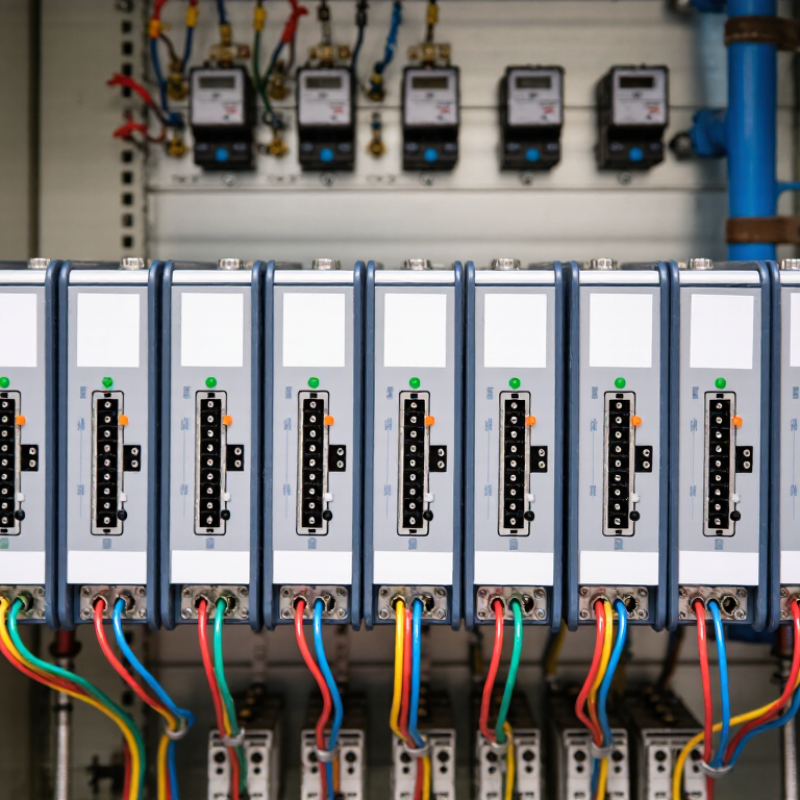
A 4–20 mA analog signal splitter receives one industrial current signal and creates two or more usable outputs. For example, one pressure transmitter can feed a control system and a recorder at the same time. The splitter reads the input current, then reproduces proportional output signals, such as 4–20 mA or 0–10 V. This prevents multiple devices from loading the same loop. It also helps separate field instruments from sensitive monitoring equipment.
A reliable splitter should provide stable scaling, low signal drift, and suitable electrical isolation. Isolation matters when instruments use different power supplies or grounding points. During commissioning, technicians should check loop resistance, supply voltage, polarity, and output accuracy. A small wiring mistake can produce a false process value. Some devices accept powered inputs, while others depend on loop power, so the datasheet deserves careful attention. Specifications can look similar, yet performance may differ under temperature changes. That detail is easy to overlook.
Tips: Confirm the transmitter’s signal type before selection. Test the splitter with a calibrated current source, not only a multimeter. Record readings at 4, 12, and 20 mA. Check both outputs under normal and maximum load. If the signal behaves strangely, inspect grounding before replacing hardware. A simple wiring sketch can prevent hours of confusion. Manufacturers should also state isolation voltage, response time, accuracy, and operating temperature clearly. Practical testing still matters.
How to Evaluate 4–20 mA Splitter Manufacturers
When comparing China’s top ten analog splitter manufacturers, inspect performance beyond catalog numbers. A reliable supplier should state input range, output accuracy, isolation voltage, response time, and temperature drift. Ask for calibration records linked to recognized measurement standards. Clear test methods matter more than impressive percentages.
Review the manufacturer’s field experience. Have its splitters worked in water treatment, process control, or factory automation? Request wiring diagrams, load calculations, and failure data from similar installations. Check whether each unit handles loop power correctly under long cable runs. A perfect datasheet can still hide poor terminal design or unstable isolation. I have seen small details cause large commissioning delays.
Tips: Test samples under real conditions. Apply the lowest and highest loop currents, then measure both outputs. Add expected cable resistance and cabinet temperature. Confirm channel independence during power interruption. Check documentation quality, warranty terms, spare-unit availability, and technical response time. Certifications help, but they should support practical evidence, not replace it. Ask for a traceable calibration certificate and a written acceptance procedure. If the supplier avoids these requests, reconsider the evaluation.
Suggested evaluation weights for comparing industrial analog signal splitter suppliers. The framework focuses on measurable technical and service factors rather than company or brand data.
Accuracy and long-term stability are essential for reliable 4–20 mA transmission. Galvanic isolation helps prevent ground loops, while response time, temperature performance, channel configuration, documentation, and after-sales support should be reviewed against the requirements of the control system.
China’s Top 10 Analog Splitter Manufacturers
China’s top 10 analog splitter manufacturers are best compared by engineering depth, production consistency, and documented field performance. These suppliers typically build modules for 4–20 mA control loops, process instruments, energy systems, and factory automation. Experienced teams understand loop loading, signal isolation, noise rejection, and the effects of temperature drift. Good products should provide clear wiring diagrams, stable terminals, and calibration records linked to serial numbers. That evidence matters more than polished catalog language. Testing should cover input accuracy, output response, insulation strength, and long-duration operation. Some manufacturers also support custom ranges, DIN-rail mounting, and responsive technical communication for overseas integrators.
Selecting among the top 10 requires more than comparing prices. Buyers should request sample test data, production tolerances, warranty terms, and change-control procedures. Factory audits can reveal whether calibration is performed on every unit or only on selected samples. Ask how failed modules are isolated and how corrective actions are recorded. Compliance documentation should match the destination market and the actual product configuration. Still, no supplier is perfect. A splitter may pass bench tests yet behave differently beside variable-frequency drives or long cables. That weakness is easy to overlook. Pilot installation, thermal checks, and repeated loop measurements can expose it before wider deployment. Manufacturers willing to discuss such limits usually show stronger technical maturity and more reliable cooperation.
China’s leading 4–20mA analog splitter manufacturers typically focus on signal isolation, stable transmission, and practical installation. A reliable splitter receives one current-loop signal and provides two or more electrically isolated outputs. This helps one transmitter serve a controller, display, recorder, or alarm system without creating ground loops. Important features include low conversion error, fast response, adjustable zero and span, reverse-polarity protection, and clear terminal labeling. DIN-rail mounting is useful inside crowded control cabinets. Compact housing also improves wiring access.
Field experience shows that application details matter more than impressive specifications. In a water-treatment panel, an isolated splitter can send a tank-level signal to both a PLC and a remote monitoring unit. In a factory furnace, it can separate the temperature signal from the control system and the safety display. Technicians should check loop power, load resistance, channel isolation, ambient temperature, and electromagnetic interference before installation. Not every model performs equally under heavy noise. That is easy to overlook. Calibration should use a trusted current source at 4mA, 12mA, and 20mA. Record the measured outputs and inspect terminal tightness during commissioning. Some products include fault indication, but users should not treat one alarm light as complete diagnostics. Practical testing remains necessary. Moreover, a well-designed splitter can reduce troubleshooting time, yet poor grounding or incorrect wiring can still produce unstable readings.
Selecting the right Chinese manufacturer for an analog splitter requires more than comparing prices.
For a 4–20 mA splitter, confirm the input range, output channels, isolation method, accuracy, and maximum load. Ask for the exact wiring diagram, not a general product sheet. A reliable manufacturer should provide calibration data, test records, and clear tolerance values. Check whether the unit remains stable near 4 mA and 20 mA, where small errors can affect control signals. Temperature drift matters too, especially inside crowded control cabinets.
Request samples from the same production line used for volume orders. Test them with your actual transmitter, cable length, and receiving equipment. A splitter may perform well on a bench but react differently in a noisy cabinet. Verify EMC testing, insulation strength, terminal quality, and enclosure materials. Factory audits can reveal practical details, such as calibration benches, component storage, and repair procedures. Certificates help, but traceable test evidence is stronger.
Communication is another selection test. Ask technical questions and observe the response. Does the supplier explain limitations honestly? Does it confirm lead times, spare parts, firmware changes, and inspection standards in writing? A low quotation may exclude testing or customized terminals. I once underestimated the effect of a small load difference; the signal became unstable during commissioning. That experience made sample validation essential. Leave room for uncertainty. Even a capable manufacturer may need clearer drawings, repeated tests, or a revised design before approval.
Comparative selection table based on commonly available Chinese industrial signal-isolation product configurations, published technical ranges, and typical export purchasing conditions. Confirm the final specifications, certifications, test reports, and delivery terms directly with the supplier.
| Rank | Manufacturer Profile | Primary Application | Typical 4–20 mA Configuration | Typical Accuracy and Response | Isolation and Protection | Power Options | Common Compliance Documents | Typical OEM and Export Terms | Best Fit for Buyers Seeking |
|---|---|---|---|---|---|---|---|---|---|
| 1 | Profile A High-volume industrial specialist | Process automation, water treatment, HVAC control, and factory monitoring | 1 input / 2 outputs 2 inputs / 2 outputs Active or passive loop | Typical accuracy: ±0.1% of span Response time: generally below 10 ms | Three-port isolation between input, output, and power; transient protection commonly available | 24 VDC standard; 12 VDC and wide-range DC versions may be offered | CE declaration, RoHS statement, product test report, and insulation test data | Low-to-medium MOQ; private labeling and terminal customization commonly supported | Stable supply, broad model coverage, and competitive unit pricing for recurring orders |
| 2 | Profile B DIN-rail automation specialist | PLC, DCS, SCADA, and control-panel integration | 4–20 mA input 4–20 mA output DIN-rail housing | Typical accuracy: ±0.1–0.2% of span Response time: approximately 5–20 ms | Input-to-output isolation commonly rated around 1.5–2.5 kVDC, depending on model | 18–30 VDC or 20–30 VDC; loop-powered variants may be available | CE, RoHS, EMC test summary, dielectric-strength report, and wiring diagram | Small trial orders accepted by many suppliers; standard models often have short lead times | Compact panels, standardized wiring, and straightforward installation |
| 3 | Profile C Safety-oriented instrumentation supplier | Oil and gas auxiliaries, chemical processing, boilers, and rotating equipment | Signal isolator Signal splitter HART pass-through option | Typical accuracy: ±0.1% of span Temperature drift often specified below 0.02% FS/°C | Galvanic isolation with reverse-polarity, overcurrent, and surge protection options | 24 VDC; redundant power or alarm relay options may be quoted | CE, RoHS, EMC documentation, calibration certificate, and factory inspection report | Project-based quotations; engineering review usually required for hazardous-area applications | Traceability, documentation, and additional protection for demanding environments |
| 4 | Profile D Cost-focused standard-module producer | General machinery, building automation, test benches, and utility systems | Single-channel Dual-channel 4–20 mA / 0–10 V conversion | Typical accuracy: ±0.2% of span Response time: approximately 10–30 ms | Basic input/output isolation; protection level varies by enclosure and circuit design | 24 VDC typical; AC/DC supply versions may be available for panel systems | CE and RoHS commonly available; request EMC and safety reports before purchase | Low MOQ and economical samples; customization normally limited to labels and terminals | Budget-sensitive projects using standard signals and moderate accuracy |
| 5 | Profile E OEM and custom-design manufacturer | Customized instruments, branded control cabinets, and system integrators | Custom input/output Multi-channel Custom enclosure | Typical accuracy: ±0.1–0.2% of span Performance depends on the approved circuit design | Isolation voltage and protection functions can be defined in the technical specification | 12 VDC, 24 VDC, or customer-defined supply range | CE, RoHS, EMC, material declarations, and customer-specific inspection records | Engineering fee or tooling may apply; medium MOQ is common for customized models | Private labeling, firmware or enclosure changes, and long-term product ownership |
| 6 | Profile F Compact signal-conditioning supplier | Remote I/O cabinets, skid systems, compact machines, and mobile equipment | Slim DIN rail 1-in / 2-out Current repeater | Typical accuracy: ±0.1–0.2% of span Response time: approximately 8–25 ms | Compact three-way isolation; check channel-to-channel isolation for multi-channel modules | 24 VDC common; low-power designs may operate below 1.5 W per channel | CE, RoHS, EMC summary, dimensional drawing, and terminal assignment sheet | Standard products generally available from stock or within a short production cycle | Space saving, low heat generation, and clean control-panel layouts |
| 7 | Profile G Harsh-environment instrumentation supplier | Outdoor equipment, power facilities, transportation, and industrial field installations | 4–20 mA isolator Surge-resistant version Wide-temperature option | Typical accuracy: ±0.2% of span Specified operating temperature may reach approximately −20 to +70°C | Enhanced surge, reverse-polarity, and overvoltage protection; verify test levels for the selected model | 18–36 VDC or 24 VDC; regulated supply recommended | CE, RoHS, EMC report, environmental test data, and enclosure information | Higher specification may increase price and lead time; sample testing is recommended | Outdoor deployment, electrical noise immunity, and wider operating conditions |
| 8 | Profile H Measurement and calibration-focused supplier | Laboratory systems, calibration benches, production testing, and precision monitoring | Precision 4–20 mA Loop simulator interface Adjustable span options | Typical accuracy: ±0.05–0.1% of span Calibration data and adjustment points may be provided | Low-noise galvanic isolation; confirm common-mode and insulation specifications | 24 VDC standard; clean and regulated power is normally recommended | Calibration certificate, test curve, CE, RoHS, and quality inspection record | Moderate MOQ; calibration and customized test documentation may add cost | Repeatability, measurement quality, and documented production testing |
| 9 | Profile I Export-oriented control-component supplier | International OEM projects, distributor programs, and replacement markets | Standard 4–20 mA Multi-language manual Global packaging | Typical accuracy: ±0.1–0.2% of span Performance normally stated in English datasheets | Standard input/output isolation; verify power-to-signal isolation before system approval | 24 VDC is most common; international plug and packaging requirements can be supported | CE, RoHS, English datasheet, packing list, commercial invoice, and origin documents | Export packaging and documentation support; payment and shipping terms are negotiable | Overseas purchasing, distributor support, and simplified import documentation |
| 10 | Profile J Integrated automation solution provider | Complete control systems, water plants, energy projects, and turnkey automation | Signal splitter PLC interface Cabinet integration | Typical accuracy: ±0.1–0.2% of span System response depends on the complete control architecture | Module-level isolation with optional power distribution, alarms, and diagnostic functions | 24 VDC control power; redundant supply design may be available for projects | CE, RoHS, wiring diagrams, FAT documents, inspection reports, and project test records | Quotation normally based on drawings, bill of materials, quantity, and commissioning scope | One-stop engineering, cabinet assembly, system testing, and project coordination |
2106 N Glassell St, Orange, CA 92865
(714)-754-6669 | sale@site_be823a56-9df9-438e-acac-cd7d504ea0ad
Monday: 8:00 AM – 4:30 PM
Tuesday: 8:00 AM – 4:30 PM
Wednesday: 8:00 AM – 4:30 PM
Thursday: 8:00 AM – 4:30 PM
Friday: 8:00 AM – 4:30 PM