What is Small Laboratory Equipment and Its Importance in Research?
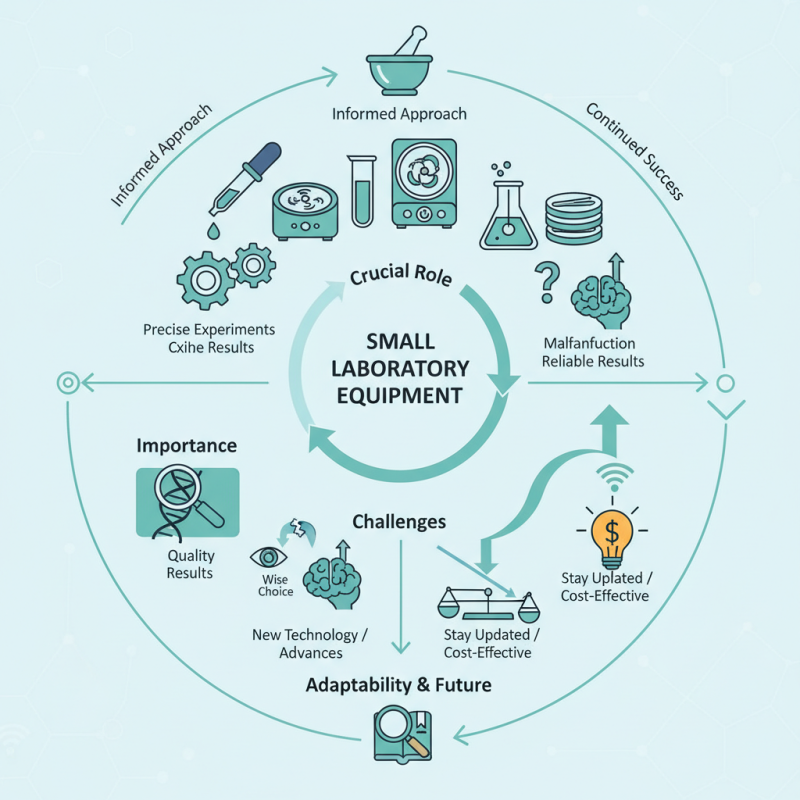
Small Laboratory Equipment plays a crucial role in various research fields. These tools, often overlooked, are fundamental for precise experiments and reliable results. From pipettes to centrifuges, each piece serves a specific purpose. Researchers rely on small equipment for accuracy in measurements and sample handling.
The importance of this equipment cannot be understated. Quality results often hinge on the performance of these small devices. However, challenges can arise. Equipment may malfunction or prove inadequate for certain experiments, leading to a need for reevaluation. Researchers must choose their tools wisely, as even minor discrepancies can skew data.
Moreover, the evolving landscape of research demands adaptability. Advances in technology introduce new small laboratory equipment options. Staying updated is essential for researchers aiming to maintain reliability. It’s not just about having the tools but understanding how to use them effectively. Thus, an informed approach towards small laboratory equipment is vital for continued success in research endeavors.
Definition and Overview of Small Laboratory Equipment
Small laboratory equipment plays a crucial role in research settings. These tools are essential for experiments, analyses, and everyday tasks. They include items such as pipettes, centrifuges, and balances. Each piece of equipment is designed to enhance accuracy and efficiency in lab work.
In many cases, researchers rely on these small tools to obtain precise measurements. A pipette, for example, allows for the accurate transfer of liquids. This precision can significantly impact experimental results. However, improper use can lead to errors, reminding us of the importance of training and experience.
Laboratories often contain specialized small equipment that caters to specific needs. Such items could range from microtiter plates to vials. Understanding their operation is vital. Researchers must ensure they are using the right equipment for their tasks. Overlooking this could affect research outcomes, creating a gap in reliability and validity. Small laboratory equipment is indispensable, but it requires careful handling and knowledge to maximize its benefits.
Types of Small Laboratory Equipment and Their Functions
Small laboratory equipment plays a critical role in research across various disciplines. Understanding the types and functions of this equipment can significantly impact experimental outcomes. Common items include pipettes, beakers, and centrifuges. Each serves a specific purpose, enhancing precision and efficiency. For instance, pipettes allow for accurate liquid transfers, crucial for reproducibility in experiments.
Beakers are versatile containers used for mixing and holding liquids. They are essential in chemical reactions. A study by the National Institute of Health highlights that improper use of such equipment can lead to experimental errors. Meanwhile, centrifuges separate components based on density. This is vital in biological research for isolating DNA or proteins.
The value of small laboratory equipment cannot be overstated. However, researchers often face challenges in training and calibration. Data from laboratory surveys indicate that nearly 30% of lab errors stem from misuse or inadequate knowledge of the equipment. In this context, focusing on proper training and usage standards is necessary for improved outcomes.
Importance of Small Laboratory Equipment in Research
Small laboratory equipment plays a crucial role in facilitating experiments and research across various scientific disciplines. Below is a representation of different types of small laboratory equipment and their functions.
Importance of Small Laboratory Equipment in Scientific Research
Small laboratory equipment plays a crucial role in scientific research. These tools, ranging from pipettes to centrifuges, greatly enhance the accuracy and efficiency of experiments. According to a report by the National Science Foundation, small equipment accounts for approximately 70% of laboratory equipment used in research settings. This significant portion highlights its importance in various fields, including biology, chemistry, and physics.
The precision of small laboratory tools is vital for collecting reliable data. For instance, a research study published in the Journal of Experimental Biology emphasized how accurate measuring devices affect experimental outcomes. Flaws in measurements can lead to unreliable results. However, not all small equipment is perfect; maintenance and calibration are essential to ensure consistent performance. A lack of proper upkeep may result in data discrepancies, complicating research efforts.
Furthermore, small laboratory equipment is often perceived as less significant than larger machinery. However, these tools provide foundational support in experiments. For example, in the field of microbiology, accurate pipetting is crucial for successful cell culture. Data from the American Chemical Society reveals that 40% of experimental errors stem from improper handling of small instruments. This indicates a need for more training and awareness around their proper use. Understanding the importance of meticulously using these tools can lead to more robust scientific findings.
Factors to Consider When Choosing Small Laboratory Equipment
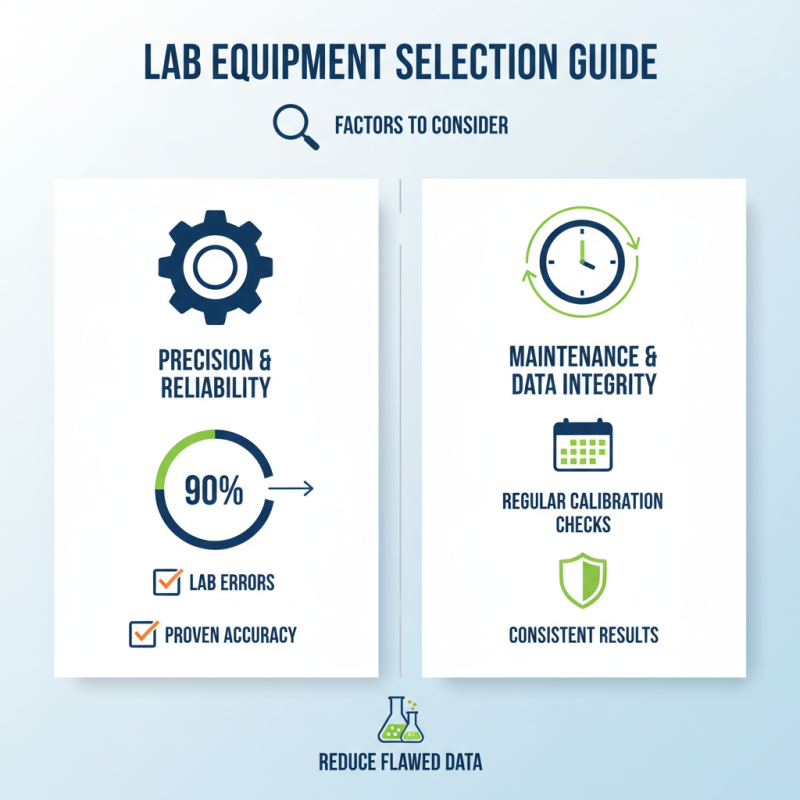
When selecting small laboratory equipment, several key factors come into play. Precision is crucial. Research shows that 90% of laboratory errors stem from equipment inaccuracy. Therefore, lab managers should prioritize tools with proven reliability and accuracy. The calibration frequency of devices affects their performance. Regular checks ensure consistent results, reducing the risk of flawed data.
User-friendliness is another essential aspect. Many researchers struggle with complex equipment. A survey indicated that 70% of lab workers prefer intuitive designs, which enhance efficiency. Equipment that is easy to operate saves valuable time and reduces training costs. Moreover, durability is vital. Regular use can lead to wear and tear, impacting results. High-quality materials usually indicate a longer lifespan.
Budget constraints cannot be ignored. Research from the Laboratory Equipment Institute highlights that organizations often overlook total cost ownership. Hidden expenses, like maintenance and training, can add up. A focus on long-term value rather than initial price can lead to better investment decisions. A solid balance between quality and cost is needed for optimal outcomes.
Maintenance and Safety Practices for Small Laboratory Equipment
Small laboratory equipment plays a critical role in enhancing research outcomes. Proper maintenance and safety practices are vital for ensuring the longevity and reliability of these tools. According to data from the National Institutes of Health, over 30% of laboratory accidents result from improper equipment handling. Training staff on maintenance schedules is crucial to mitigate these risks.
Regular inspections are necessary for small devices like pipettes and centrifuges. Frequent calibration ensures accuracy, which is essential in experiments. A survey from the American Society for Biochemistry and Molecular Biology reveals that 25% of researchers experienced issues due to neglected maintenance. Additionally, using protective gear reduces the risk of injuries during equipment use.
Establishing a culture of safety is equally important. Ensuring a clean workspace prevents contamination and accidents. Lab personnel should avoid overcrowding work areas. Small actions, like wiping down surfaces after use, can significantly improve safety. Reflection on daily routines can lead to better practices in equipment care and safety. Small changes make a big difference in maintaining an efficient and safe research environment.
What is Small Laboratory Equipment and Its Importance in Research? - Maintenance and Safety Practices for Small Laboratory Equipment
| Equipment Type |
Common Uses |
Maintenance Tips |
Safety Practices |
| Pipettes |
Transferring small volumes of liquids |
Calibrate regularly, clean after use |
Use gloves, avoid contact with skin |
| Microscopes |
Magnifying samples for detailed examination |
Keep lenses clean, check light source |
Handle with care, avoid sudden movements |
| Balances |
Measuring mass of samples accurately |
Level regularly, calibrate, and clean |
Avoid placing heavy objects, handle gently |
| Centrifuges |
Separating liquids based on density |
Check rotor condition, clean after spills |
Secure lids, balance loads evenly |
| Refrigerators |
Storing temperature-sensitive samples |
Check temperature regularly, organize samples |
Avoid opening frequently, check seals |