Polyaluminum Chloride Water Treatment is widely used to clarify drinking water, wastewater, and industrial process water. It acts as a coagulant, helping suspended particles gather into larger, heavier flocs. These flocs can then settle or become easier to remove through filtration. The process may reduce turbidity, color, organic matter, and some phosphorus compounds. Clearer water follows.
In a typical treatment plant, operators add a controlled PAC solution before rapid mixing. A short mixing period spreads the chemical through the water. Gentle agitation then allows visible flocs to form. Their size may resemble soft snowflakes or small brown clouds. Operators monitor turbidity, pH, alkalinity, temperature, and residual aluminum. Jar testing remains important because the best dose changes with raw water conditions. Rainfall can alter river water within hours. Industrial wastewater may change even faster.
PAC often performs well across a broad pH range. However, it is not a universal fix. Excessive dosing can increase sludge production and raise treatment costs. Poor mixing may leave water cloudy, despite using more chemical. Real plants are less tidy than laboratory tests. That matters.
Reliable application requires trained personnel, accurate dosing equipment, and documented quality checks. Water professionals should follow local drinking-water standards and the manufacturer’s safety data. Product concentration also varies between suppliers, so direct comparisons can mislead. A practical evaluation should examine clarification, filtration performance, sludge handling, and final-water quality together. This article explains what PAC is used for, how it works, and where careful judgment remains essential.
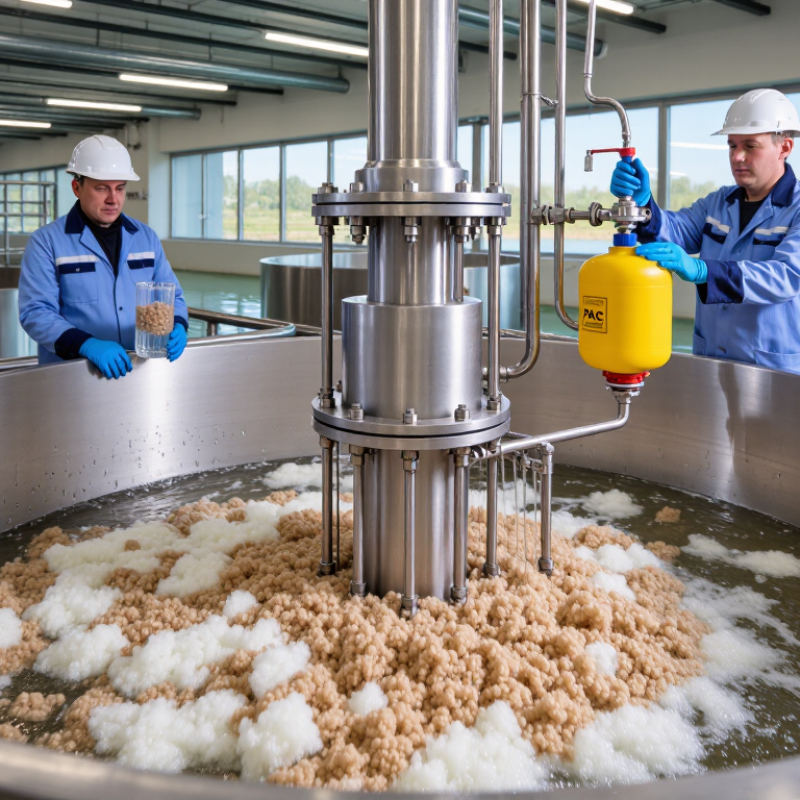
Polyaluminum chloride (PAC) is a pre-hydrolyzed aluminum coagulant used in water treatment. It contains positively charged aluminum species that react quickly in water. These species neutralize the negative charges surrounding fine particles, including clay, organic matter, and some microorganisms. Once the electrical barrier weakens, particles collide and form larger clusters called flocs.
The process is visible in a jar test. Cloudy water may develop soft, brownish flocs within minutes. These flocs can settle in a clarifier or become easier to remove through filtration. PAC is used in drinking water production, municipal wastewater treatment, and several industrial processes. It can also reduce turbidity, color, and part of the phosphorus load. However, performance depends on pH, alkalinity, temperature, mixing speed, and the water’s organic content.
Dose control matters.
A higher dose is not always better. Excess PAC can increase sludge production, leave unwanted aluminum residues, or reduce treatment efficiency. Operators should test the actual source water rather than copy a dosage from another facility. Jar testing, regular turbidity checks, and residual aluminum monitoring provide stronger evidence than visual clarity alone. The chemistry is reliable, but not perfectly predictable. Seasonal runoff can change water conditions within hours. A treatment plan may need adjustment, and even experienced operators can misjudge a difficult water sample. Careful records help reveal those mistakes and improve future dosing decisions.
Typical starting-dose ranges for PAC coagulation based on raw-water turbidity
Polyaluminum chloride (PAC) is a pre-hydrolyzed aluminum coagulant used to destabilize suspended particles and colloids in water. It reacts with water to form positively charged aluminum species and aluminum hydroxide flocs, which capture turbidity, color, microorganisms, and part of the organic matter. The ranges shown are typical jar-test starting points; the final PAC dose depends on raw-water chemistry, temperature, alkalinity, pH, and treatment objectives.
Polyaluminum chloride (PAC) is mainly used during coagulation, the first major step in conventional water treatment. Operators dose it into raw water, where aluminum-based polymers neutralize particle charges. Fine clay, organic matter, and microbes then form visible flocs. Gentle mixing enlarges these flocs before sedimentation or dissolved air flotation removes them. A short mixing mistake can leave the water cloudy.
PAC also supports clarification and filtration. In sedimentation basins, stronger flocs settle faster and reduce the solids reaching rapid sand or multimedia filters. In dissolved air flotation, lighter flocs attach to air bubbles and rise for removal. Some plants apply PAC before membrane pretreatment, especially when algae or natural organic matter threatens fouling. However, PAC does not replace filtration or disinfection. That assumption needs correction.
The World Health Organization’s 2022 drinking-water guidelines recommend turbidity below 1 NTU after treatment, with lower levels preferred for reliable disinfection. The U.S. Environmental Protection Agency’s Surface Water Treatment Rules also link filtration performance with pathogen-control requirements, including 3-log Giardia and 4-log virus reduction targets in specified systems. Jar testing remains essential because raw-water temperature, alkalinity, and organic content change seasonally. A dose that works in January may perform poorly after heavy rain. Operators should verify residual aluminum, settled-water turbidity, filter head loss, and sludge volume, rather than trusting a single laboratory result.
| Water Treatment Process | Primary Purpose of Polyaluminum Chloride | Target Contaminants or Water Characteristics | How It Works | Typical Treatment Stage | Important Operating Considerations |
|---|---|---|---|---|---|
| Coagulation | Destabilizes suspended and colloidal particles so they can combine into larger particles. | Turbidity Clay Colloids Natural organic matter | Hydrolyzed aluminum species reduce particle charge and form aluminum hydroxide flocs that capture impurities. | Rapid mixing, immediately after chemical dosing. | Dose selection depends on raw-water turbidity, alkalinity, temperature, pH, organic content, and the PAC formulation. |
| Flocculation | Supports the growth of small destabilized particles into settleable or filterable flocs. | Fine suspended solids Colloidal matter | Gentle mixing allows microflocs to collide and form larger aggregates without breaking them apart. | Slow-mix basin after coagulation. | Mixing intensity and detention time must be controlled; excessive turbulence can shear the flocs. |
| Sedimentation and Clarification | Improves the removal of chemically formed flocs before filtration. | Settled solids Turbidity Color | Dense aluminum-based flocs settle by gravity and carry adsorbed or entrapped impurities out of the water. | Clarifiers, settling tanks, or lamella settlers. | Hydraulic loading, sludge withdrawal, and floc strength affect clarification performance. |
| Direct Filtration | Reduces the particle load entering filters and improves filter-water quality. | Low-to-moderate turbidity Residual colloids Fine particles | PAC creates flocs that are retained within granular media or other filtration media. | After rapid mixing and flocculation, without a full sedimentation step. | Suitable only when raw-water solids loading is compatible with the filter design; excessive dosing may shorten filter runs. |
| Conventional Drinking-Water Treatment | Provides chemical clarification as part of a multi-barrier treatment train. | Turbidity Apparent color Organic matter Microorganism-associated particles | Coagulation and floc removal lower the particle burden before filtration and disinfection. | Typically before clarification, filtration, and final disinfection. | PAC does not replace disinfection; finished water must meet applicable drinking-water requirements. |
| Color Removal | Reduces visible color caused by dissolved or colloidally dispersed substances. | Humic substances Fulvic substances Industrial color bodies | Aluminum hydrolysis products adsorb and enmesh some color-causing compounds in the formed floc. | Coagulation followed by clarification or filtration. | Color removal varies with pH, molecular characteristics, alkalinity, and the source of the colored water. |
| Phosphorus Removal | Converts soluble phosphate into insoluble aluminum phosphate or incorporates it into aluminum-rich flocs. | Orthophosphate Total phosphorus | Aluminum reacts with phosphate and the resulting solids are removed by settling or filtration. | Biological nutrient-removal polishing, tertiary treatment, or chemical precipitation. | Stoichiometric demand, competing reactions, pH, and sludge production must be considered. |
| Industrial Wastewater Clarification | Separates suspended and emulsified material from process wastewater. | Suspended solids Emulsified oils Metals associated with solids Color | Charge neutralization and sweep flocculation produce solids that can be separated in a clarifier or dissolved-air flotation unit. | After equalization and pH adjustment; before biological or polishing treatment. | Jar testing is important because wastewater composition can change significantly during production cycles. |
| Dissolved Air Flotation | Creates flocs that attach to fine air bubbles and rise to the surface. | Low-density solids Algae Fats, oils, and grease | PAC destabilizes particles, while recycled pressurized water supplies bubbles that float the floc. | Coagulation and flocculation immediately before flotation. | Floc size, bubble distribution, recycle ratio, and surface loading influence performance. |
| Sludge Conditioning | Can improve dewaterability and solids capture in selected sludge streams. | Water-treatment sludge Fine solids | Aluminum-based coagulation can promote aggregation of fine particles before thickening or dewatering. | Before gravity thickening, flotation thickening, filtration, or centrifugation. | Effectiveness is sludge-specific; chemical addition may increase ash content and residual aluminum in the cake. |
| Pretreatment for Membrane Systems | Reduces particulate and colloidal loading that can contribute to membrane fouling. | Turbidity Colloids Natural organic matter | Coagulation followed by clarification or filtration removes foulant precursors before membrane separation. | Upstream of microfiltration, ultrafiltration, nanofiltration, or reverse osmosis. | Residual aluminum and carryover flocs must be controlled to protect membranes and maintain stable operation. |
| Note: Polyaluminum chloride performance is site-specific. The optimum product type, dose, pH, mixing conditions, and contact time should be established through laboratory jar testing and confirmed by pilot or full-scale monitoring. PAC is a coagulant and does not, by itself, provide complete pathogen disinfection. | |||||
Polyaluminum chloride (PAC) is a coagulant used to remove contaminants from raw water and wastewater. In a treatment basin, it neutralizes the electrical charges that keep tiny particles suspended. These particles then join into larger flocs, which can settle or pass through filtration.
PAC is especially effective against suspended solids, colloids, and turbidity. It can also reduce natural organic matter, color, phosphate, and some algae-related particles. In certain water conditions, dissolved metals may attach to the forming flocs and become easier to remove. The water often looks clearer within minutes. However, appearance alone proves very little.
PAC does not reliably destroy viruses, bacteria, or other pathogens. Disinfection remains necessary. Its performance also depends on pH, alkalinity, temperature, mixing speed, and the water’s organic load. A jar test helps operators compare doses using real samples. Too little PAC leaves cloudy water, while too much may create excess sludge or increase residual aluminum. No single dose works everywhere. Field results can disagree, even between nearby water sources. A clear sample may still contain dissolved contaminants that coagulation cannot capture. Regular laboratory testing is therefore essential for accurate control.
Polyaluminum chloride is applied as a coagulant before sedimentation and filtration. It neutralizes suspended particles, organic matter, and some color compounds. Operators usually inject PAC into a rapid-mix chamber. Strong mixing spreads the chemical within seconds. Gentle flocculation follows, allowing larger particles to form and settle.
Dosing must follow jar testing, not guesswork. A practical starting range is often 5–50 mg/L of commercial PAC, depending on raw-water turbidity, alkalinity, temperature, and product strength. Actual calculations should use the product’s aluminum oxide content. The Water Research Foundation identifies jar testing and continuous process monitoring as essential for reliable coagulation control. US EPA guidance also emphasizes adjusting coagulant feed when source-water conditions change.
Small changes matter. A rainy-day turbidity spike may require a higher dose. Excess PAC can leave residual aluminum and create fragile flocs.
The World Health Organization reports operational targets of about 0.1 mg/L aluminum for large treatment plants and 0.2 mg/L for small facilities. These values support process control, rather than replacing local standards.
Operators should check settled-water turbidity, filter performance, pH, and residual aluminum. PAC commonly performs well across a broad pH range, but performance still depends on alkalinity. That detail is easy to overlook. A dose that works at 20°C may underperform during colder water conditions. Experience helps, but repeat testing remains necessary.
(Sources: WHO Guidelines for Drinking-water Quality; Water Research Foundation coagulation and flocculation guidance; US EPA Drinking Water Treatability Database)
Polyaluminum chloride (PAC) is a coagulant used in water treatment. It helps remove suspended solids, colloids, turbidity, and some natural organic matter. During treatment, PAC neutralizes the electrical charges that keep tiny particles apart. These particles then form larger flocs, which settle or filter more easily. Operators may see clearer water and faster sedimentation after proper dosing. PAC often works across a wider pH range than some traditional coagulants. It does not disinfect.
Its benefits depend strongly on site conditions. In many systems, PAC can reduce chemical consumption and produce more compact sludge. However, performance is not automatic. Water temperature, alkalinity, particle type, and mixing intensity can change the result. Excessive dosing may increase residual aluminum, raise sludge production, or leave water chemistry unbalanced. Poor dosing can also create fragile flocs that break during filtration. Jar testing is essential, although it does not perfectly reproduce full-scale treatment. That limitation deserves attention.
Safety begins with trained handling and accurate product information. PAC solutions can be acidic and irritating to skin, eyes, and airways. Workers should follow the safety data sheet, use suitable gloves and eye protection, and provide ventilation during transfer. Storage tanks and pipelines must resist chemical corrosion. Drinking-water facilities should verify treatment chemicals against applicable quality requirements. Residual aluminum and treated-water pH require routine monitoring. A clear sample is not proof of safe water. Small testing errors matter.
2106 N Glassell St, Orange, CA 92865
(714)-754-6669 | sale@site_be823a56-9df9-438e-acac-cd7d504ea0ad
Monday: 8:00 AM – 4:30 PM
Tuesday: 8:00 AM – 4:30 PM
Wednesday: 8:00 AM – 4:30 PM
Thursday: 8:00 AM – 4:30 PM
Friday: 8:00 AM – 4:30 PM