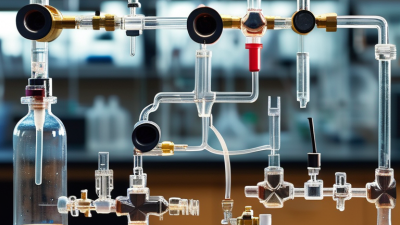
Choosing the right Y Tube Laboratory Apparatus can influence flow control, reaction safety, and daily laboratory efficiency. The shape may look simple, but small differences matter. Branch angles, tube diameter, wall thickness, and joint design can change how smoothly gases or liquids move. A narrow branch may restrict flow. A poorly matched joint may cause leakage, movement, or difficult cleaning.
Laboratory glassware specialist Dr. Elena Marquez explains, “Choose the connection for its working conditions, not its appearance.” This practical view supports a careful selection process. Before purchasing, consider the chemicals involved, operating temperature, pressure level, and cleaning method. Borosilicate glass often suits demanding laboratory work, but compatibility must still be checked. Some applications may require a different material or a reinforced design.
Fit matters most.
This guide explores how to compare Y Tube Laboratory Apparatus options for different laboratory setups. It examines branch dimensions, connection standards, transparency, thermal resistance, and supplier reliability. It also considers details that are easy to overlook, such as trapped residue inside the junction or limited access for brushes. A product can appear well made and still be unsuitable for a specific setup. That is an uncomfortable possibility, but it deserves attention. Practical testing, manufacturer specifications, and documented quality checks should support the final decision. The best choice is not always the most expensive model. It is the apparatus that performs consistently, cleans thoroughly, and matches the real demands of your laboratory.

A Y-tube laboratory apparatus has one inlet and two connected outlets, forming a clear forked pathway. This structure allows a gas or liquid to divide, combine, or move between two vessels. Its function depends on the direction of flow and the connection arrangement. A glass Y-tube is useful when chemical visibility matters. A flexible polymer version may better suit movement, vibration, or temporary setups. The choice is not always obvious.
Check the tube diameter before purchase. A narrow branch can restrict flow and increase pressure. The joint angle also affects installation, especially inside crowded fume hoods. Inspect the surface for chips, uneven walls, or weak-looking connections. These small defects can cause leakage or breakage during cleaning. I have found that matching the connector size is more important than choosing a visually impressive shape. Fit matters most.
Consider chemical compatibility, temperature limits, pressure ratings, and cleaning methods. For corrosive liquids, verify resistance using reliable technical data, not assumptions. For gas work, secure each branch with suitable clamps and test connections with an approved leak-check method. Do not force rigid tubing onto a fragile outlet. It may fit today and fail tomorrow. I sometimes prefer a slightly larger Y-tube because it is easier to rinse, but that choice can waste sample volume. The best design depends on flow control, vessel spacing, and the precision your experiment requires.
How to Choose Y Tube Laboratory Apparatus for Your Lab?
Choosing a Y tube starts with your experiment, not the catalog image. Map every connection before ordering. Record tube diameter, branch angle, fluid type, pressure, temperature, and expected flow. A 6 mm tube may fit one vessel yet restrict another. For gas work, check whether the branch must split flow evenly. For liquid transfer, consider dead volume and drainage. Viscous samples may need a wider bore and smoother internal surfaces. Small details matter.
Material compatibility deserves careful attention. Check chemical resistance charts, but do not trust them blindly at extreme temperatures or concentrations. The WHO Laboratory Biosafety Manual, fourth edition, places risk assessment before equipment selection. That means the Y tube should support containment, secure connections, and safe decontamination. DOE Labs21 guidance reports that laboratories can use five to ten times more energy per square foot than offices. Low-resistance connections can therefore support efficient airflow, especially in systems using continuous exhaust. I would also verify the connection under real operating conditions. A fitting that looks perfect on paper may leak after repeated sterilization. That is an easy mistake. Use calibrated gauges, inspect seals, and document the final configuration. Recheck it after the first test.
How to Choose Y Tube Laboratory Apparatus for Your Lab?
Selecting a Y tube laboratory apparatus starts with the liquid, temperature, and cleaning method. Glass suits high-temperature work and offers clear visibility during transfers. Plastic can reduce breakage, but some solvents may soften or discolor it. Always check chemical compatibility data before use. Do not rely on appearance alone. A clear tube may still weaken after repeated exposure. I have seen small material errors become expensive maintenance problems.
Size affects flow, pressure, and handling. Choose an internal diameter that matches your tubing, connectors, and expected flow rate. A narrow branch can restrict movement and increase pressure near the junction. A wider tube may improve flow but reduce control during small-volume transfers. Check the branch angle, stem length, and connection style. These details affect setup space and cleaning access. The best configuration is not always the largest one.
Tips: Measure every connection before ordering. Inspect the Y junction for bubbles, cracks, rough edges, or uneven walls. Use a leak test with a safe fluid before introducing laboratory chemicals. Record the material, dimensions, temperature range, and inspection date. If repeated cleaning changes the surface, replace the apparatus sooner. This may feel cautious, but informal judgment is easy to misremember. Consider whether the tube supports your actual workflow, not just the equipment list.
Choosing a Y-tube laboratory apparatus starts with the connection points, not appearance. Match each branch to the correct inner diameter, tubing type, and joint standard. A loose fit can leak. A tight fit can crack glass or stress flexible tubing. Check the intended medium, temperature range, and operating pressure before ordering. Borosilicate glass suits many routine chemical applications, but it is not universally resistant. Highly corrosive chemicals and sudden temperature changes require specific material review. Do not guess.
Safety checks should happen before every use, even with familiar equipment. Hold the Y-tube under bright light and inspect for chips, hairline cracks, clouding, or blocked branches. Replace damaged pieces. Never force a stopper or hose onto a rigid branch. Wetting the connection may reduce friction, but it does not repair a poor size match. Secure the assembly with suitable clamps, leaving room for thermal expansion. If gas flow or pressure is involved, include a relief path and confirm that downstream tubing can tolerate the load. A closed branch can turn a minor blockage into a dangerous pressure event.
Ease of maintenance depends on internal geometry. Choose branches that can be flushed, brushed, and visually checked without hidden pockets. Rinse compatible residues promptly, then use an approved cleaning method for the material. Avoid abrasive tools; small scratches weaken glass. Dry the apparatus fully before storage, and keep joints protected from dust. Record recurring blockage, discoloration, or leakage. That record may reveal a process problem rather than a cleaning problem. “Easy to clean” does not mean “easy to verify.” If inspection is difficult, select a simpler Y-tube, even when it costs more.
| Evaluation Dimension | Borosilicate Glass Y-Tube | Polypropylene Y-Connector | PTFE Y-Connector | Silicone Y-Tube |
|---|---|---|---|---|
| Typical applications | Gas distribution, vacuum lines, reaction assemblies, and visual process monitoring | Low-cost liquid or air routing in general laboratory tubing systems | Aggressive chemical transfer, solvent handling, and high-purity fluid paths | Flexible pumping, peristaltic-pump connections, and low-pressure fluid transfer |
| Common material characteristics | Rigid, transparent, chemically resistant, and suitable for repeated laboratory use | Lightweight, rigid, opaque or translucent, and generally resistant to many aqueous chemicals | Highly chemically resistant, low surface energy, and non-wetting for many liquids | Flexible, elastic, translucent, and easy to connect to barbed fittings |
| Connection compatibility | Check hose-bore diameter, ground-glass joint size, adapters, clamps, and sealing components | Check tubing inner diameter and the connector’s outside diameter; barbed fittings usually provide a friction fit | Check tube dimensions, compression fittings, and whether the smooth surface requires clamps or specialized fittings | Select tubing with an inner diameter that matches the barbs without excessive stretching |
| Chemical compatibility | Suitable for many acids, bases, and solvents; verify compatibility with hydrofluoric acid and concentrated hot alkali | Good for many aqueous solutions; verify compatibility with strong oxidizers, aromatic solvents, and high-temperature chemicals | Broad chemical resistance; verify performance with molten alkali metals, fluorine-containing reagents, and high-energy oxidizers | Good resistance to water and many dilute chemicals; may absorb or swell in some organic solvents |
| Temperature considerations | Handles laboratory heating better than flexible polymers; avoid thermal shock and sudden temperature changes | Normally selected for ambient or moderately warm service; follow the supplier’s rated operating temperature | Suitable for a wide temperature range, but the complete assembly is limited by seals and connected tubing | Useful over a moderate temperature range; repeated heating can accelerate hardening, swelling, or loss of elasticity |
| Pressure and vacuum safety | Suitable for properly supported low-pressure or vacuum assemblies; inspect for chips and cracks before use | Generally intended for low-pressure service; secure tubing to prevent blow-off and leakage | Good choice for demanding chemical lines, but pressure limits depend on wall thickness and fittings | Best for low-pressure service; do not use for unverified high-pressure gas or vacuum applications |
| Leak-control features | Use correctly fitted joints, compatible gaskets, clamps, and leak testing before operation | Use fully seated tubing, retaining clips, or clamps where movement or pressure may occur | Use compatible seals and compression fittings; PTFE’s low friction can allow tubing to slip if unsecured | Barbed connections are convenient, but clamps may be required for reliable long-term sealing |
| Cleaning and decontamination | Easy to visually inspect; can usually be washed, rinsed, and dried without retaining many residues | Easy to rinse, but opaque sections may hide residues or biological contamination | Low surface energy helps reduce adhesion; verify cleaning agents and avoid contamination from trapped fittings | Easy to disconnect and rinse; flexible tubing can retain residues at bends and should be replaced when difficult to clean |
| Sterilization suitability | Often suitable for dry heat or steam sterilization when the complete assembly is rated for the process | Some grades tolerate steam sterilization; confirm the material grade and cycle temperature | Often compatible with chemical or thermal sterilization, subject to seals and assembly design | Some grades are autoclavable; repeated cycles can reduce flexibility, so inspect regularly |
| Main safety risks | Breakage, sharp fragments, thermal shock, and implosion during unsuitable vacuum use | Tubing detachment, deformation from heat, and chemical degradation not visible from the outside | Unexpected tubing slip, seal failure, and incorrect use with incompatible reagents | Kinking, permeation, swelling, fatigue, and hose detachment under pressure or repeated flexing |
| Ease of maintenance | Reusable and durable, but requires inspection for cracks, chips, blocked branches, and damaged joints | Low maintenance; replace when brittle, discolored, cracked, or permanently deformed | Long service life when correctly selected; clean fittings carefully and replace damaged seals | Simple to replace; establish a routine replacement interval for high-cycle or contamination-sensitive work |
| Best selection when | Visibility, rigidity, heat resistance, and chemical observation are priorities | Economy, simple routing, low weight, and routine ambient-temperature work are priorities | Chemical resistance, low contamination, and demanding solvent service are priorities | Flexibility, rapid replacement, and compatibility with moving or pumping systems are priorities |
Selecting a Y tube laboratory apparatus requires more than comparing unit prices. Quality affects sealing, flow control, cleaning, and repeatability. For glass models, check borosilicate composition, dimensional tolerance, wall thickness, and resistance to thermal shock. For polymer models, review chemical compatibility and temperature limits. ISO/IEC 17025-based laboratories should also request batch traceability and a certificate of conformity.
Cost needs a wider lens. A 2024 Grand View Research report estimated the global laboratory equipment market at USD 40.7 billion in 2023. It projected a 7.5% compound annual growth rate through 2030. This growth increases supplier choice, but specifications can remain vague. Compare the purchase price with leak testing, cleaning time, replacement frequency, packaging damage, and delivery reliability. A cheaper Y tube may become expensive after repeated failures. I would not assume the longest warranty means better performance. That judgment needs evidence.
Tips: Ask suppliers for drawings, material certificates, pressure or leak-test methods, and accepted tolerances. Request sample units before a large order. Test them with your actual tubing, solvents, and connectors. Record flow resistance and joint stability. Check whether spare parts remain available for several years. Supplier answers should be specific, not merely “laboratory grade.” Keep written records for each lot. Small omissions matter. A supplier may provide excellent documents but inconsistent dimensions; inspect incoming samples and revise your criteria when results disagree.
2106 N Glassell St, Orange, CA 92865
(714)-754-6669 | sale@site_be823a56-9df9-438e-acac-cd7d504ea0ad
Monday: 8:00 AM – 4:30 PM
Tuesday: 8:00 AM – 4:30 PM
Wednesday: 8:00 AM – 4:30 PM
Thursday: 8:00 AM – 4:30 PM
Friday: 8:00 AM – 4:30 PM