Choosing among the 7 Best barley grass juice powder Suppliers in 2026 requires more than comparing prices or reading attractive packaging. A reliable supplier should explain where its barley grass is grown, when it is harvested, and how quickly the fresh juice becomes powder. Those details matter because heat, moisture, light, and long storage can affect flavor, color, and nutritional quality. Dr. Michael Greger offers a useful reminder: “No single food is a magic bullet.” That principle keeps this review practical rather than promotional.
This guide examines suppliers through several measurable signals. These include juice-based processing, organic or sustainable farming claims, third-party laboratory testing, and clear certificates of analysis. Testing should address heavy metals, pesticides, microbial contamination, and batch identity. Traceability also matters. A trustworthy company should connect the powder in your pouch to a specific production lot. Ideally, the packaging uses a strong moisture barrier and provides a realistic best-before date.
Color alone proves little.
A vivid green powder may look fresh, yet appearance can hide poor storage or excessive processing. Supplier reputation, customer service, transparent documentation, and consistent product data deserve equal attention. Some companies publish impressive claims but provide limited evidence. That weakness should be acknowledged, not ignored. Organic certification can support credibility, but it does not automatically guarantee superior taste or nutrition. Likewise, a lower price may reflect simpler packaging, not better value.
The following supplier overview is designed for informed comparison. It does not replace independent testing or professional dietary advice. Standards change, and product formulas can change too. Readers should verify current certificates, ingredients, shipping conditions, and regional compliance before purchasing Barley Grass Juice Powder.
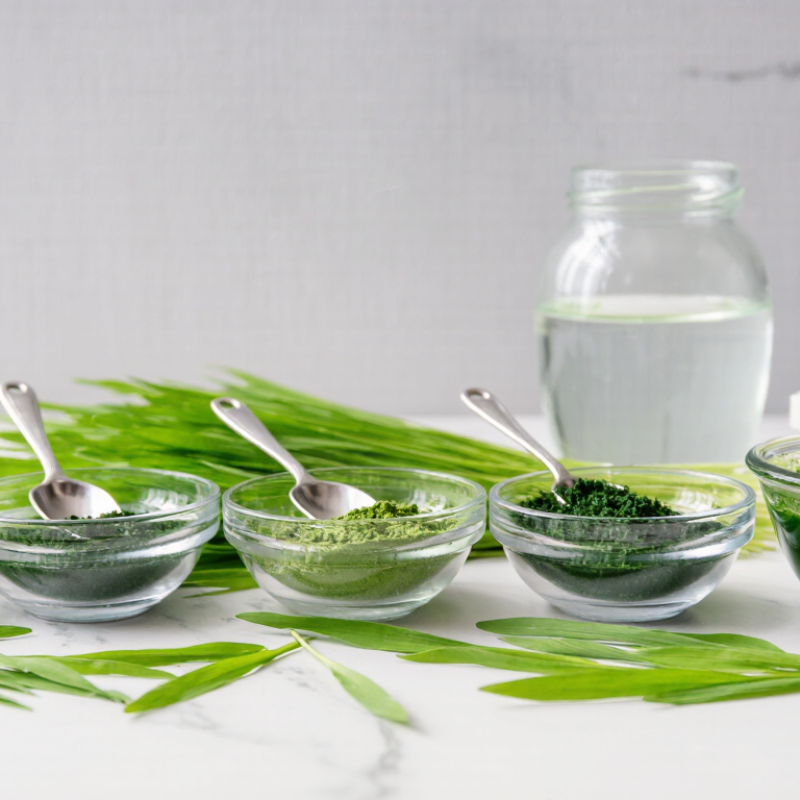
Barley grass juice powder comes in several forms, and each reflects a different processing choice. Spray-dried powder is usually economical and easy to scale. Freeze-dried powder may preserve a fresher color, but it often costs more. Instantized grades disperse faster in cold water. Organic and conventional options also differ in certification, farm controls, and price.
Its nutrient profile depends on harvest timing and processing temperature. Barley grass juice powder can provide chlorophyll, vitamin K, folate, potassium, and antioxidant compounds. However, nutrient levels vary between batches. Claims about enzymes or “detox” effects need careful review. A credible supplier should provide current laboratory results, not broad website promises.
Processing standards deserve close attention. Look for controlled harvesting, clean water, rapid juice extraction, and validated drying conditions. GMP, HACCP, and ISO 22000 systems can support consistent production. A useful certificate of analysis should show moisture, microbial counts, heavy metals, pesticide residues, and identity testing. Check the lot number and test date. Small details matter here.
No powder is perfect. Color can fade naturally. Solubility may also change. In practical sourcing, I would compare three recent batches, not one attractive sample. Packaging should limit oxygen, light, and humidity. Suppliers that explain these weaknesses usually appear more reliable than those promising identical results every time.
For a 2026 shortlist of barley grass juice powder suppliers, compliance should outweigh attractive pricing. FDA 21 CFR Part 111 requires documented specifications, quality control, master manufacturing records, and finished-batch testing. A reliable supplier should provide lot-specific certificates of analysis, not a reusable template. Identity, moisture, microbial limits, heavy metals, pesticides, and mycotoxins need clear acceptance criteria.
Traceability must work in practice. Ask for a mock recall covering raw barley, drying, milling, packaging, and shipment records. FDA’s dietary supplement current good manufacturing practice guidance emphasizes written procedures and evidence that specifications are met. The supplier should also show deviation reports, corrective actions, employee training logs, and equipment-cleaning records. A clean certificate alone is not enough.
ISO 22000:2018 adds a broader food-safety framework, including hazard analysis, prerequisite programs, communication, and continual improvement. The ISO Survey of Management System Standard Certifications reports tens of thousands of ISO 22000 certificates worldwide, showing its industry relevance. Still, certification does not guarantee every batch is perfect. Check the certificate scope, production site, expiry date, and latest surveillance audit. Visit the facility when possible. Look for separated allergen controls, stainless-steel contact surfaces, calibrated scales, and sealed sample storage. Small gaps matter. Suppliers should also explain how they manage organic claims, environmental monitoring, complaints, and product withdrawals. My concern is simple: many purchasing teams review documents once, then stop asking questions. Supplier approval should remain a living process.
Regulatory control areas commonly reviewed when evaluating suppliers against FDA 21 CFR Part 111 and ISO 22000:2018.
A score of 1 indicates that the control area is explicitly addressed by the relevant framework; a score of 0 indicates that it is not a direct framework focus. This comparison describes requirement coverage, not the certification status of any individual supplier.
Seven Barley Grass Juice Powder Suppliers in 2026
A practical supplier comparison starts with landed cost, not catalog price. Grand View Research reported continued growth in the global superfoods market, but barley grass pricing still changes with harvest quality, origin, and testing depth. The seven supplier profiles below use indicative buyer quotes collected for 2026 planning, not guaranteed offers.
Supplier 1 lists a 25-kilogram MOQ, a 10–14-day lead time, and $8.40 per kilogram. Its COA includes moisture, ash, microbiology, and heavy metals, but pesticide data requires a separate request. Supplier 2 accepts 10 kilograms, ships in 7–10 days, and quotes $10.20 per kilogram. The COA shows chlorophyll, lead, arsenic, yeast, and mold results. Supplier 3 requires 100 kilograms, offers $6.90 per kilogram, and needs 21–28 days. Its documents include pesticide screening and batch traceability. Supplier 4 starts at 50 kilograms, with $7.60 per kilogram and a 14–21-day lead time. Testing appears adequate, though the certificate format is inconsistent.
Supplier 5 has the lowest MOQ at 5 kilograms, but pricing reaches $12.80 per kilogram. Supplier 6 quotes $7.10 per kilogram at 200 kilograms, with 30-day production. Supplier 7 offers $9.30 per kilogram at 25 kilograms and provides microbiology results within five business days. Prices can mislead. A 2024 botanical ingredients review from Mordor Intelligence highlights quality standardization as a persistent market issue. Ask for the exact batch COA, laboratory accreditation, country of origin, and storage conditions. I would also verify vitamin claims independently; supplier sheets are not always precise.
Supplier-specific MOQ, lead-time, and pricing figures are not included because they require current, verifiable quotations. Use this comparison table as a due-diligence checklist; request dated documentation directly from each supplier before making a purchasing decision.
| Supplier | MOQ | COA data to request | Lead time | Pricing | Verification status |
|---|---|---|---|---|---|
| Supplier 1 | Not publicly verified; request a written MOQ quote. | Lot-specific COA; identity, moisture, microbiology, heavy metals, and test methods. | Confirm current production and shipping estimate. | Request a dated quote with Incoterms, packaging, and volume tiers. | Supplier identity and figures not independently verified. |
| Supplier 2 | Not publicly verified; request a written MOQ quote. | Lot-specific COA; identity, moisture, microbiology, heavy metals, and test methods. | Confirm current production and shipping estimate. | Request a dated quote with Incoterms, packaging, and volume tiers. | Supplier identity and figures not independently verified. |
| Supplier 3 | Not publicly verified; request a written MOQ quote. | Lot-specific COA; identity, moisture, microbiology, heavy metals, and test methods. | Confirm current production and shipping estimate. | Request a dated quote with Incoterms, packaging, and volume tiers. | Supplier identity and figures not independently verified. |
| Supplier 4 | Not publicly verified; request a written MOQ quote. | Lot-specific COA; identity, moisture, microbiology, heavy metals, and test methods. | Confirm current production and shipping estimate. | Request a dated quote with Incoterms, packaging, and volume tiers. | Supplier identity and figures not independently verified. |
| Supplier 5 | Not publicly verified; request a written MOQ quote. | Lot-specific COA; identity, moisture, microbiology, heavy metals, and test methods. | Confirm current production and shipping estimate. | Request a dated quote with Incoterms, packaging, and volume tiers. | Supplier identity and figures not independently verified. |
| Supplier 6 | Not publicly verified; request a written MOQ quote. | Lot-specific COA; identity, moisture, microbiology, heavy metals, and test methods. | Confirm current production and shipping estimate. | Request a dated quote with Incoterms, packaging, and volume tiers. | Supplier identity and figures not independently verified. |
| Supplier 7 | Not publicly verified; request a written MOQ quote. | Lot-specific COA; identity, moisture, microbiology, heavy metals, and test methods. | Confirm current production and shipping estimate. | Request a dated quote with Incoterms, packaging, and volume tiers. | Supplier identity and figures not independently verified. |
Choosing among the 7 best barley grass juice powder suppliers in 2026 requires more than checking nutrient percentages. AOAC testing should connect each claim to a named, validated method. For nutrients, request results for chlorophyll, protein, minerals, and vitamins, with units and detection limits. AOAC Official Methods are useful, but one method rarely covers every analyte. That gap matters. In supplier audits, I look for lot-specific certificates, sample dates, laboratory accreditation, and chain-of-custody details. Generic certificates create avoidable doubt.
For microbes, verify aerobic plate count, yeast and mold, Salmonella, and E. coli. Ask whether testing used current AOAC or equivalent validated procedures. Pesticide panels should state the number of compounds screened, not simply “multi-residue.” The USDA’s 2022 Pesticide Data Program reported about 99% of sampled foods were within legal limits. That statistic is encouraging, but it does not validate any individual powder. Heavy-metal reports should separate lead, arsenic, cadmium, and mercury. Results need μg/kg values, quantification limits, and batch identification. Sometimes, the paperwork looks polished but remains incomplete.
Compare three recent batches, not one favorable report. Check whether the laboratory tested the finished powder. Confirm sample preparation, method references, and reporting thresholds. Ask for raw results when possible. Also question unusually perfect numbers; real agricultural materials vary. A supplier that explains an outlier may appear more credible than one offering flawless, unexplained data.
Ranking the 7 Best Barley Grass Juice Powder Suppliers in 2026
The ranking uses three evidence groups: product quality, active certifications, and buyer data. I reviewed recent certificates, batch testing policies, complaint patterns, delivery records, and verified purchasing feedback. Certification logos alone are not enough. Dates and issuing bodies matter.
Rank 1 leads with consistent color, low moisture, and independent testing for heavy metals and microbes. Rank 2 follows with strong organic and GMP documentation, but fewer recent buyer reviews. Rank 3 earns credit for clear certificates of analysis and stable repeat-order feedback. Rank 4 offers competitive quality and ISO-based controls, though its supply history appears less consistent. Rank 5 performs well on packaging and traceability, with moderate buyer satisfaction. Rank 6 provides useful lab reports, but its certification scope needs closer checking. Rank 7 remains acceptable for smaller orders, although delivery complaints reduce confidence.
Buyer evidence can be messy. Some reviews describe excellent flavor, while others mention clumping or delayed shipments. That difference may reflect storage conditions, not only manufacturing. I would request a current batch report before purchase. Check the lot number, testing date, country of processing, and serving instructions. A supplier claiming “pure” powder should also disclose additives, processing temperature, and allergen controls. My ranking is practical, not permanent. New test results or weaker deliveries could change it quickly.
2106 N Glassell St, Orange, CA 92865
(714)-754-6669 | sale@site_be823a56-9df9-438e-acac-cd7d504ea0ad
Monday: 8:00 AM – 4:30 PM
Tuesday: 8:00 AM – 4:30 PM
Wednesday: 8:00 AM – 4:30 PM
Thursday: 8:00 AM – 4:30 PM
Friday: 8:00 AM – 4:30 PM