2026 Top 3 Point Bending Tensile Testing Machine Price?
In 2026, the price of a 3-Point Bending Tensile Testing Machine depends on more than its catalog label. Load capacity, frame stiffness, control software, fixtures, calibration, and regional service all influence the final cost. A compact laboratory unit may cost several thousand dollars, while an advanced system with automated measurement can exceed $30,000. These figures are practical estimates, not universal rules.
Dr. George D. Quinn, a materials-testing specialist associated with NIST research, has stated, “A test method should answer a specific engineering question.” That principle matters when comparing machines. A buyer testing plastics may need different supports and deflection sensors than a manufacturer testing ceramics or metal components. The machine must match the material, specimen size, and required standard. Small details matter.
Look beyond the headline price.
A low quotation may exclude calibration, installation, software updates, or replacement fixtures. Those costs can quietly change the budget. In some cases, imported equipment appears cheaper but creates longer repair delays. That is easy to underestimate. Buyers should request a complete quotation, verify applicable standards, and confirm the supplier’s technical support record.
This guide examines 2026 pricing through a practical purchasing lens. It compares equipment classes, essential specifications, hidden ownership costs, and reasonable questions for suppliers. The market is not perfectly transparent. Some prices remain difficult to compare. Still, careful evaluation can reduce expensive mistakes and identify a 3-Point Bending Tensile Testing Machine that fits both current testing needs and future laboratory demands.
What Is a Three-Point Bending Tensile Testing Machine?
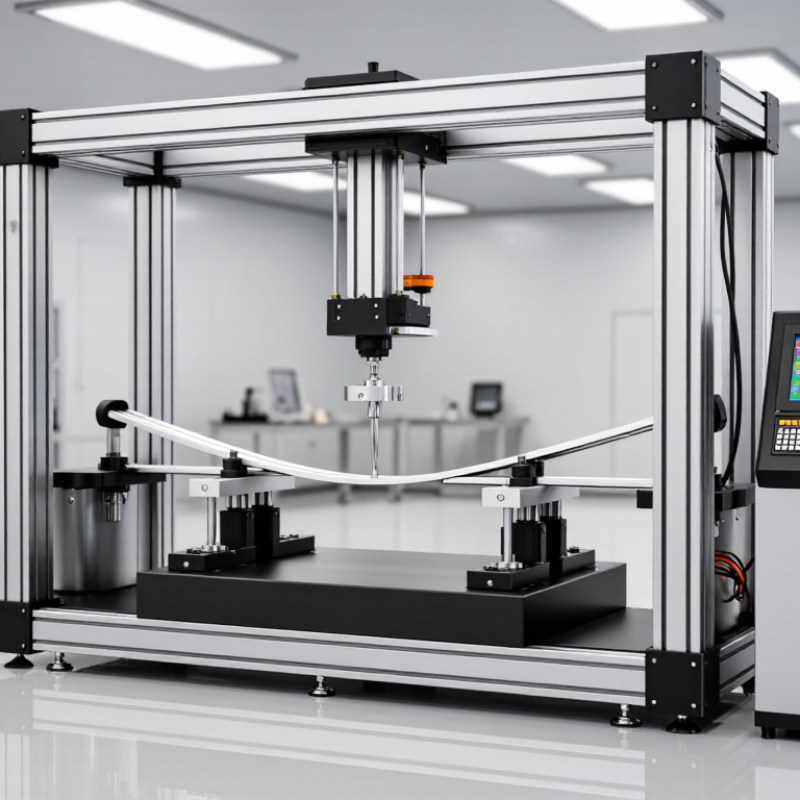
A three-point bending tensile testing machine is a universal testing system fitted with a flexural fixture. The specimen rests on two lower supports. A loading nose presses its center downward at a controlled speed. The machine records force, displacement, and sometimes strain until failure or a defined deflection limit. The word “tensile” can mislead. This is mainly a flexural test, not a pure tensile test. That distinction matters.
ASTM D790 and ISO 178 are widely used for plastic flexural testing, while ASTM E290 applies to bend testing of metallic materials. Results can include flexural strength, flexural modulus, yield behavior, and fracture location. A 2024 Fortune Business Insights report valued the global materials testing market at about USD 3.75 billion in 2023, reflecting continued demand for controlled laboratory verification. However, market size does not determine machine suitability. Fixture span, load capacity, crosshead accuracy, software traceability, and calibration quality matter more than appearance.
A practical lab lesson is simple: fixture alignment changes results. Even a small support-position error can distort stress calculations. Operators should check specimen dimensions, conditioning, loading rate, and zero force before each series. Price estimates for 2026 therefore vary widely. A basic benchtop configuration may suit plastics, while reinforced composites or metals require higher loads and stronger frames. I would not trust a low quotation without calibration records, standard-compatible fixtures, and service details. Cheap can become expensive.
How Does Three-Point Bending Tensile Testing Work?
2026 Top 3 Point Bending Tensile Testing Machine Price?
A three-point bending test measures flexural behavior, not pure tensile strength. The specimen rests on two supports. A loading nose presses its center downward. The lower surface experiences tension, while the upper surface undergoes compression. Between them, a neutral axis carries nearly zero longitudinal stress.
The machine records force and deflection continuously. Software then calculates flexural strength, modulus, and strain. ASTM D790 commonly uses a 16:1 support-span-to-thickness ratio for plastics. ISO 178 also defines specimen dimensions, loading conditions, and calculation methods.
These details matter. A small span error can change the reported modulus. In practical laboratory work, misaligned supports often create uneven cracks or unstable curves. That is an easy mistake to overlook.
Tips: Check specimen thickness at several points before testing. Keep the loading nose centered. Use the standard’s recommended test speed, and document temperature and humidity.
ASTM D790 and ISO 178 are useful references, but they are not interchangeable in every project. I would not compare results without confirming the selected method first.
For 2026 purchasing, price usually rises with load capacity, displacement accuracy, fixture quality, and software functions. A basic system may suit routine plastic testing. Advanced systems need stronger frames and more precise sensors. The cheapest option can become expensive when calibration or unsuitable fixtures affect repeatability.
Test method first, quotation second.
Which Factors Affect the Machine’s Price in 2026?
In 2026, the price of a three-point bending tensile testing machine depends on more than its frame and motor. Load capacity is a major driver. A compact 5 kN model may cost far less than a 100 kN system built for thick composites or metal samples. The machine’s rigidity, displacement accuracy, and sensor quality also influence the quotation. Small errors become visible during repeat tests.
Fixtures can change the budget quickly. Standard bending supports are affordable, while adjustable spans, heated fixtures, compression tools, and custom grips require additional engineering. Software matters too. Basic control may suit routine testing, but advanced systems can record force, deflection, stress, and failure curves automatically. Standards-based reporting usually increases both development and validation costs. More automation, more expense.
Calibration, installation, training, and after-sales service should be checked carefully. A low initial price may exclude traceable calibration or spare sensors. That can create unexpected laboratory downtime. Shipping distance, import duties, electrical requirements, and local technical support also affect the final cost. In my experience, buyers often compare machines before defining their test method. That is backward. A precise specification usually produces a more reliable quote. Still, even experienced purchasers can overlook future fixture needs. Budget for change.
2026 Price Ranges for Different Machine Configurations
2026 Price Ranges for Different Machine Configurations
In 2026, a basic 3 point bending tensile testing machine may cost $1,500–$4,000. This configuration usually includes a manual frame, a basic load cell, and a simple digital display. It suits classroom demonstrations and light laboratory checks. A motorized benchtop model often ranges from $4,000–$12,000. It adds controlled speed, test software, and stronger fixtures for plastics, wood, and small metal samples. Prices vary by capacity and region.
Servo-hydraulic systems commonly cost $15,000–$45,000 or more. They support higher loads, repeated testing, and stricter data requirements. Environmental chambers, automatic specimen alignment, and advanced extensometers can raise the price beyond $50,000. Do not compare prices by frame capacity alone. A low quote may exclude calibration, installation, software licenses, or the bending fixture. I have seen budgets fail because one small fixture was missing.
Tips: Request an itemized quotation. Confirm load range, span adjustment, accuracy, sampling rate, and local service. Ask whether calibration documents follow recognized laboratory practices. Choose capacity carefully; excessive capacity can reduce measurement sensitivity. Also check sample dimensions before ordering. A cheaper machine may look practical, but its software could be frustrating during daily testing. That detail deserves more attention.
2026 Top 3-Point Bending Tensile Testing Machine Price Ranges
Indicative 2026 purchase-price ranges in USD for machine-only configurations. Manual systems are suitable for basic laboratory tests, motorized electromechanical systems provide improved speed and control, and servo-controlled universal testing machines support higher loads, advanced measurement, and automated test methods. Prices typically exclude taxes, freight, installation, calibration, and customized fixtures.
How to Choose and Purchase the Right Testing Machine
Choosing a 2026 three-point bending tensile testing machine should begin with your material, not its advertised price. ASTM D790 and ISO 178 define common flexural methods for plastics, but metals, composites, and timber require different fixtures and procedures. A basic bench model may cost about USD 2,000–6,000. A laboratory system with higher load capacity, software, and calibration records may cost USD 8,000–25,000. These are working market ranges, not fixed quotations.
Industry data supports careful specification. Grand View Research’s 2024 materials testing market analysis identifies automotive, construction, and aerospace as major demand sectors. These industries increasingly require traceable results and repeatable quality checks. Confirm load capacity, crosshead speed, span adjustment, deflection measurement, and data-export functions. A 5 kN frame may suit small plastic samples, while reinforced composites often need 50 kN or more. Price alone can mislead. I have seen buyers select advanced software, then discover their laboratory lacks suitable fixtures.
Tips: Request a sample test before purchasing. Check whether calibration follows ISO 7500-1 or an equivalent national standard. Ask for fixture dimensions, spare-part costs, installation support, and software licensing terms. Review at least three written quotations. Also compare total ownership cost over five years, including calibration and maintenance. The cheapest machine may become expensive after one failed test series. That assumption deserves a second look.
2026 Top 3 Point Bending Tensile Testing Machine Price? - How to Choose and Purchase the Right Testing Machine
| Machine Configuration | Typical 2026 Price Range (USD) | Recommended Capacity | Typical Test Applications | Force Accuracy | Crosshead Speed Range | Main Advantages | Best Purchase Choice For |
| Entry-Level Benchtop Universal Testing Machine | $2,500–$6,000 | 1–10 kN | Plastic, rubber, paper, thin wood, small composite specimens, and basic tensile tests | Typically ±0.5% of indicated load or better | Approximately 0.01–500 mm/min | Compact footprint, low operating cost, simple fixture changes, and suitable for routine quality control | Schools, laboratories, packaging inspections, and small manufacturers with low-force specimens |
| Mid-Range Floor-Standing Universal Testing Machine | $6,000–$15,000 | 10–100 kN | Metals, rigid plastics, construction materials, composites, fasteners, and standard tensile or flexural specimens | Typically ±0.5% of indicated load; higher accuracy may be available with calibrated load cells | Approximately 0.001–500 mm/min, depending on controller and drive system | Broader test range, stronger frame, greater fixture compatibility, and better suitability for standards-based testing | Industrial quality departments, third-party laboratories, and research facilities with mixed materials |
| High-Capacity Precision Universal Testing Machine | $15,000–$40,000+ | 100–2,000 kN | Structural metals, concrete-related components, large composites, heavy-duty products, and advanced tensile or flexural research | Often ±0.5% of indicated load or better when properly calibrated | Approximately 0.001–250 mm/min; high-load systems may use narrower ranges | High structural rigidity, large working space, advanced data acquisition, and support for demanding test standards | Universities, certification laboratories, aerospace or automotive suppliers, and heavy-material testing facilities |
Purchase Checklist: Confirm the required maximum force, specimen dimensions, three-point bending span, tensile grips, displacement or strain measurement, applicable test standard, calibration requirements, software functions, installation conditions, warranty, training, and after-sales service. The price ranges are indicative estimates for 2026 and can vary according to capacity, fixtures, extensometers, software, certification, shipping, and installation.
